How is alar base reduction done?
There are two methods I mainly use. The first reduces the ala itself, and the second reduces the size of the nostril.
Dr. Kim Sang-ho Β· Rococo Plastic Surgery
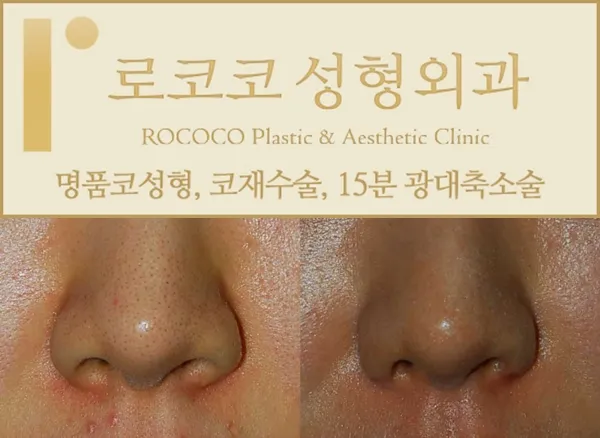
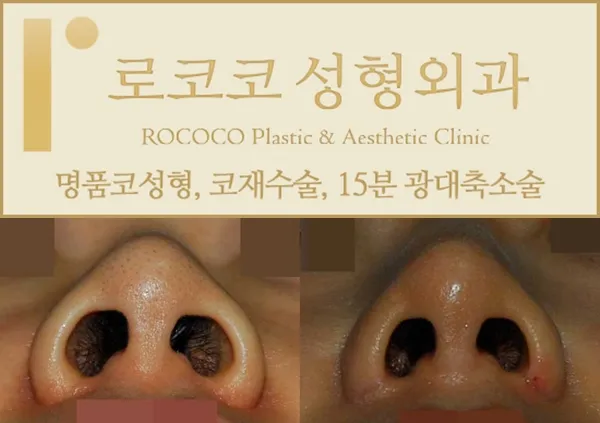
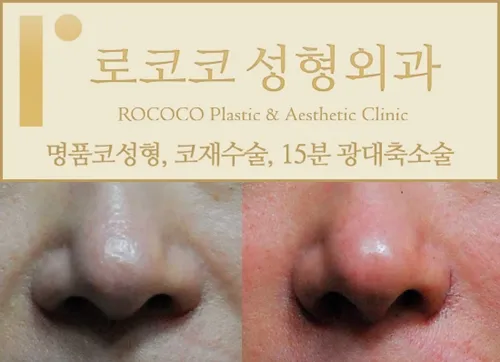
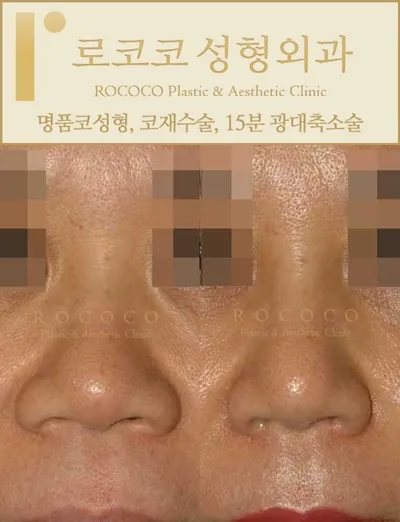
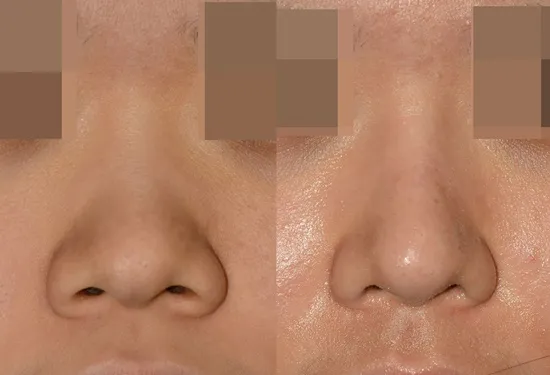
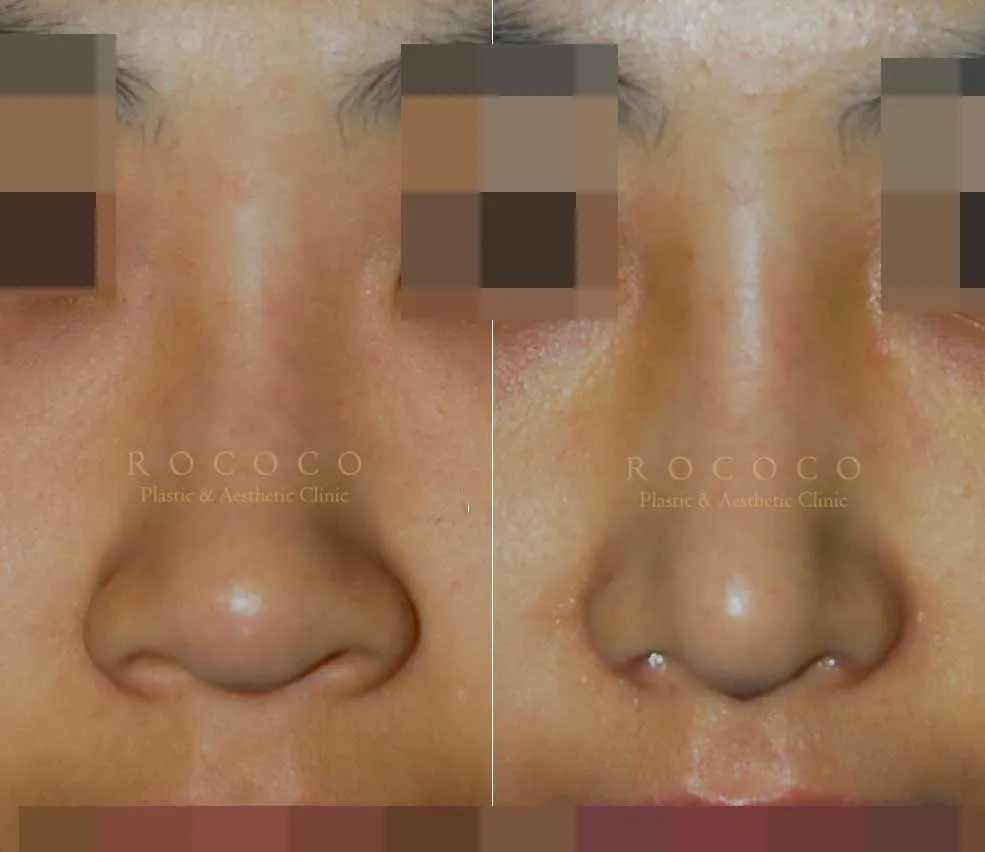
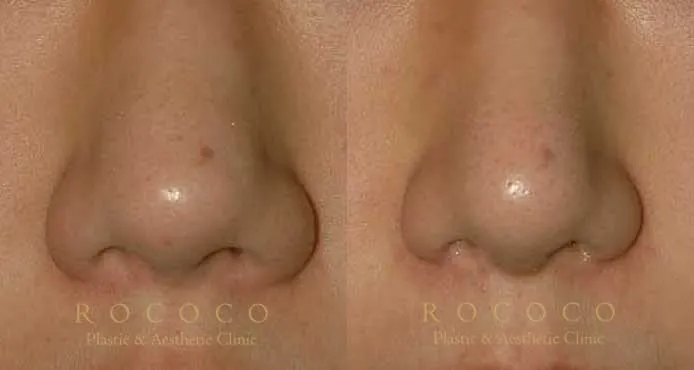
Alar base reduction β before and after
This page is an English translation of Dr. Kim Sang-ho's Korean columns. The original Korean text is shown under each quote.
Nostril reduction, which makes the nostrils smaller, is directly linked to breathing function, so the most important thing is to always design it so that it feels slightly too little. Because it cannot be reversed, it is a simple surgery but can be a very risky one.
Many people come to the clinic for bulbous tip correction. Bulbous tip correction is generally a surgery that reduces the size of the nasal tip, but when the tip becomes smaller, the alae attached on either side often look larger. So in many cases alar base reduction is done together with bulbous tip correction.
β Dr. Kim Sang-ho
볡μ½κ΅μ μ μν΄μ λ³μμ μ°Ύλ λΆλ€μ΄ λ§μΌμ λ°μ, μΌλ°μ μΌλ‘ 볡μ½κ΅μ μ μ½λμ ν¬κΈ°λ₯Ό μ€μ΄λ μμ μΈλ° μ½λμ΄ μ€μ΄λ€λ©΄ μμ λ¬λ € μλ μ½§λ³Όμ΄ μ»€λ³΄μ΄λ κ²½μ°κ° μ’ μ’ μμ΅λλ€. κ·Έλμ, λ§μ κ²½μ°μ 볡μ½κ΅μ κ³Ό ν¨κ» μ½§λ³ΌμΆμμ μ νκ² λλ΅λλ€.
Among people who ask about alar base reduction, there are many for whom I advise against surgery. Most of them have narrow nostrils at the floor and almost no slack on the lower outer side of the ala.
Alar base reduction in particular is simple, but it cannot be reversed and can be a very critical surgery.
The problem is that there is no way to undo it with revision surgery.
β Dr. Kim Sang-ho
μ½§λ³ΌμΆμμ λν΄ λ¬Έμνμλ λΆλ€ μ€μμ μ κ° μμ μ λΉμΆμ²λ리λ κ²½μ°κ° λ§μ΅λλ€. λλΆλΆμ λ°λ₯μͺ½μ 콧ꡬλ©μ΄ μ’κ³ , μ½§λ³Όμ μλμͺ½ λ°κΉ₯μͺ½ μ¬μ κ° κ±°μ μλ κ²½μ°μ λλ€.
νΉνλ μ½§λ³ΌμΆμμ μ κ°λ¨νμ§λ§ μμλ³΅κ΅¬κ° λΆκ°λ₯ν λ§€μ° μΉλͺ μ μΌ μ μλ μμ μ λλ€.
λ¬Έμ λ μ΄κ±Έ μ¬μμ μ ν΄μ λ€μ λ릴 λ°©λ²μ΄ μλ€λ κ²μ΄μ§μ.
If you look at the photo, the alar base reduction incision is located exactly at the point where the ala meets the cheek and bends. Most people assume that since this area is a crease, of course the incision should be made there (that's where to cut) to leave less of a scar. In reality, if you make the incision there, the two cut surfaces don't meet in parallel but have to join at an angle, bent, so it is hard for the suture line to heal neatly. In the end, that makes a scar more likely.
To put it simply, the key to suturing is to join the two surfaces well with the least possible tension.
So more and tighter stitches are not always better! It's good to keep that in mind.
β Dr. Kim Sang-ho
μ¬μ§μ 보μλ©΄ μ½§λ³ΌμΆμ μ κ°μ μ΄ μ½§λ³Όκ³Ό λ³Όμ΄ λΏμΌλ©΄μ ꡬλΆλ¬μ§λ λ± κ·Έ μ§μ μ μμΉν΄ μμ΅λλ€. μΌλ°μΈλ€μ λλΆλΆ μ λΆμκ° μ£Όλ¦ μ§ λΆμλΌμ λΉμ°ν μ κΈ°μ μ κ°λ₯Ό ν΄μΌ (μ κΈΈ μ§ΈμΌ) νν°κ° λ λ¨μκ±°λΌκ³ μκ°νμ€ν λ° μ€μ λ‘λ μ λΆμμ μ κ°λ₯Ό νλ©΄ λ μ κ°λ©΄μ΄ ννμΌλ‘ λΆμ§ μκ³ , κ°μ΄ μ§λ©΄μ κΊΎμ¬μ λΆμ΄μΌ νλ λ΄ν©λ©΄μ΄ μμκ² λΆκΈ°κ° νλλλ€. κ²°κ΅ κ·Έκ²μ΄ νν°κ° λ κ°λ₯μ±μ΄ λμμ§μ§μ.
λ΄ν©μ κ°λ¨ν μ€λͺ ν΄μ μ μΌ μ½ν νμΌλ‘ λ λ©΄μ μ λΆμ΄λ κ² μ΄ ν΅μ¬μ λλ€.
κ·Έλ¬λ 무쑰건 μ΄μ΄νκ² λ§μ΄ 꿰맨λ€κ³ ν΄μ μ’μ건 μλλΌλ μ ! μκ³ κ³μλ©΄ μ’κ² μ΅λλ€.
The most important point of alar reduction surgery, as I see it, is <minimizing the scar>.
Surgery that minimizes scars starts with the design. The size of the ala is a given, and the design must also take into account whether the skin is oily or dry, the elasticity of the ala, and the shape of the ala when the client smiles; during surgery, the angle and depth at which the scalpel enters, hemostasis after removal, the depth of the sutures, the type and thickness of the thread, and so on..
No matter who in the world performs the surgery, a scar remains. But I believe the essence of alar reduction surgery is to operate so that the scar is as unnoticeable as possible.
β Dr. Kim Sang-ho
μ κ° μκ°νλ μ½§λ κ°μ€μ΄κΈ° μμ μ κ°μ₯ μ€μν ν¬μΈνΈλ <νν°μ μ΅μν>μ λλ€.
νν°λ₯Ό μ€μ΄λ μμ μ λμμΈμμ μμν©λλ€. μ½§λ κ°μ ν¬κΈ°λ κΈ°λ³Έμ΄κ³ , νΌλΆκ° μ§μ±μΈμ§ 건μ±μΈμ§, μ½§λ κ°μ νλ ₯, κ³ κ°μ΄ μμλ μ½§λ κ°μ λͺ¨μλ±μ κ³ λ €ν΄μ λμμΈ ν΄μΌνκ³ μμ μμλ λ©μ€κ° λ€μ΄κ°λ κ°λ, κΉμ΄, μ κ±° ν μ§ν, λ΄ν©μ κΉμ΄μ μ€μ μ’ λ₯ λ° μ€μ λκ» λ±λ±..
μΈμ κ·Έ λκ° μμ μ ν΄λ νν°λ λ¨μ΅λλ€. λ€λ§ νν°κ° μ΅μνμΌλ‘ λμ λμ§ μκ² μμ νλ κ²μ΄ μ½§λ κ° μ€μ΄κΈ° μμ μ μ μλΌκ³ μκ°ν©λλ€.
In type A, with small nostrils, an elliptical excision, the most common method for alar base reduction, is performed.
Because only the ala is reduced, the nostril hardly changes.
In patients with thick alae, surgery to reduce the width of the ala can be done at the same time, but with this surgery a slight scar may be visible along the inner border of the nostril.
In type B, with large nostrils, nostril reduction (making the nostrils smaller) can be done together with alar base reduction.
In type D, the nostrils are reduced while the alae are drawn together with Elasticum thread. This gives the greatest effect.
This usual form of alar base reduction is meaningful only for alae of types A & B. If this kind of surgery is done for C & D, it only leaves a scar, and it is hard to feel any reduction of the ala itself.
No matter how well the surgery is done, a scar will always remain. But the surgery must be done so that, after 1β2 years when the dark red color of the scar has faded, it becomes as unnoticeable a scar as possible.
For reference, these days I rarely perform non-incisional alar base reduction using thread on its own; I only do it for people who want it as an add-on when having nostril-ala reduction. This is because, looking at long-term results over 5 years or more, I judged that the tendency to relapse is high.
Recovery period: 5 days
Face washing and makeup: from day 5
After the stitches are removed the scar is still slightly noticeable, but after 6β12 months only a very faint line remains and it becomes hard to see.
Over 6β12 months this scar fades considerably, to the point that it is almost invisible unless you look closely. Of course, how visible the scar is will vary slightly depending on constitution.
For people with darker skin, like this client and like me, there is more melanin pigment when the body is wounded, so the scar tends to be more noticeable.
But even in this case, all scars fade over time.
At your consultation, it's a good idea to always ask to see close-up photos of the surgical area. Check them, look at how visible the scars are, and then decide on surgery.

Front Β· day 10

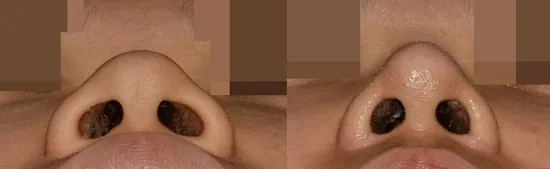
From below

Type C Β· right after surgery

Type D Β· 2 weeks (with augmentation rhinoplasty)

Nostril-ala reduction Β· 4 weeks

From below

Bulbous tip correction + alar reduction

Alar reduction
Results vary from person to person.
If only the bulbous tip is corrected without working on the alae, the alae can look relatively larger after surgery, so for noses like this it is better to have both done together.
Among people who ask about alar base reduction, there are many for whom I advise against surgery. Most of them have narrow nostrils at the floor and almost no slack on the lower outer side of the ala.
No matter how well the surgery is done, a scar will always remain. But the surgery must be done so that, after 1β2 years when the dark red color of the scar has faded, it becomes as unnoticeable a scar as possible.
Of course, because the nostrils become smaller, there is a theoretical possibility that nasal breathing may become uncomfortable, so we take this fully into account and decide together how much to reduce the nostrils.
Smoking is the worst thing for wound healing in particular. The reason is that it reduces peripheral blood circulation, so more of a scar remains.