Homeβ€ΊRhinitis Surgery (Nasal Airway Surgery)
RHINITIS SURGERY Β· NASAL AIRWAY

Rhinitis Surgery (Nasal Airway Surgery)

How is rhinitis surgery done?

What is called "rhinitis surgery" usually refers to surgery that corrects an air passage narrowed by the septum or the inferior turbinates.

  • 15minSurgery time
  • 3daysRecovery period
  • 13yearsYears performing rhinitis surgery (as of a 2019 post)

Dr. Kim Sang-ho Β· Rococo Plastic Surgery

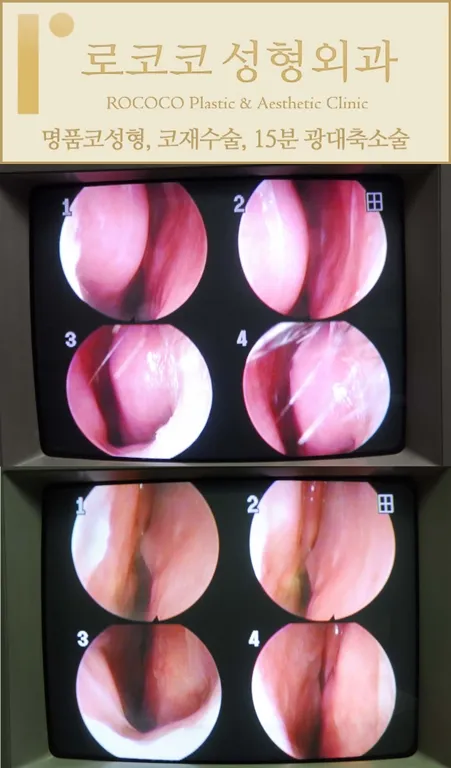
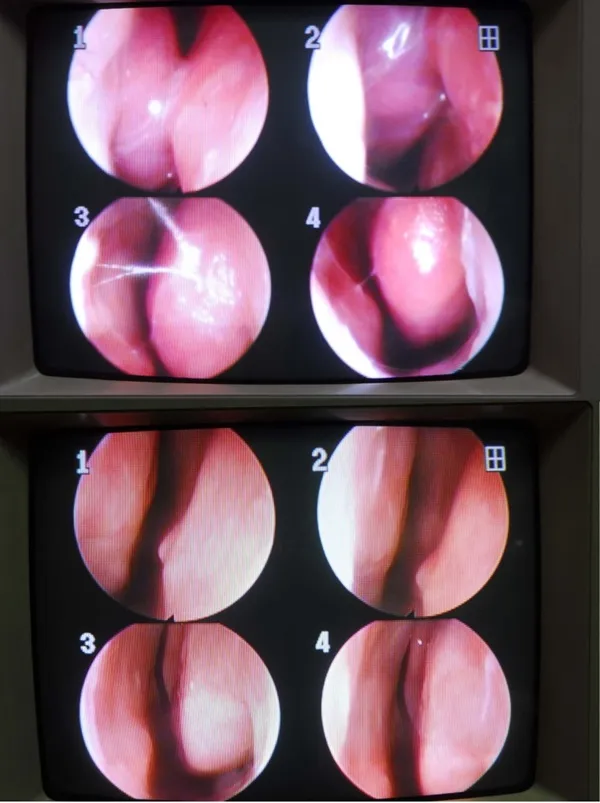
Rhinitis surgery before and after, endoscopic view
CASE

Rhinitis surgery (partial inferior turbinate resection)

This page is an English translation of Dr. Kim Sang-ho's Korean columns. The original Korean text is shown under each quote.

CAUSE Β· NASAL OBSTRUCTION

When breathing through the nose is hard because the air passage is narrow, there are several possible causes.

"Rhinitis surgery" is not an official name for a surgery.

DOCTOR'S NOTE

Dr. Kim's notes

Rhinitis surgery is not one fixed operation

"Rhinitis surgery" does not refer to one specific, exact surgery either.

1. There is SMR, Sub-Mucosal Resection, a surgery that removes the septal cartilage except for the main beam called the L-strut. Originally, this partial septal resection could be called the representative rhinitis surgery.

2. A surgery called partial inferior turbinate resection is also called rhinitis surgery. I have posted about it several times on my blog; it reduces the size of the bulging lumps on both sides of the septum.

Doing only number 1 can be called having rhinitis surgery.., and doing only number 2 can also be called having rhinitis surgery. Doing 1 + 2 at the same time is also rhinitis surgery.

β€” Dr. Kim Sang-ho
Read the original (Korean)

<λΉ„μ—Όμˆ˜μˆ > μ΄λΌλŠ” 것도 μ •ν™•ν•œ μ–΄λ–€ μˆ˜μˆ μ„ μ§€μΉ­ν•˜λŠ” 것이 μ•„λ‹ˆλžλ‹ˆλ‹€.

1. SMR 이라고 ν•΄μ„œ Sub - Mucosal Resection(μ λ§‰ν•˜ 절제) 인데, 비쀑격 μ—°κ³¨μ—μ„œ L-strut 이라고 ν•˜λŠ” λŒ€λ“€λ³΄λ₯Ό μ œμ™Έν•˜κ³  λ‚˜λ¨Έμ§€ 뢀뢄을 μ œκ±°ν•΄λ²„λ¦¬λŠ” μˆ˜μˆ μž…λ‹ˆλ‹€. μ›λž˜ λΉ„μ—Όμˆ˜μˆ μ€ 이 비쀑격 일뢀 절제술이 λŒ€ν‘œμ μ΄λΌκ³  ν•˜κ² μŠ΅λ‹ˆλ‹€.

2. ν•˜λΉ„κ°‘κ°œλΆ€λΆ„μ ˆμ œμˆ  μ΄λΌλŠ” μˆ˜μˆ λ„ λΉ„μ—Όμˆ˜μˆ  이라고 λΆ€λ¦…λ‹ˆλ‹€. 제 λΈ”λ‘œκ·Έμ—μ„œ μ—¬λŸ¬λ²ˆ ν¬μŠ€νŒ…ν–ˆλ˜ 수술인데, 비쀑격 μ–‘μͺ½ μ˜†μ— λ³Όλ‘ν•œ 혹의 크기λ₯Ό μ€„μ—¬μ£ΌλŠ” μˆ˜μˆ μž…λ‹ˆλ‹€.

1번만 해도 λΉ„μ—Όμˆ˜μˆ μ„ ν–ˆλ‹€.. κ³  ν•  수 있고, 2번만 해도 λΉ„μ—Όμˆ˜μˆ μ„ ν–ˆλ‹€.. κ³  ν•  수 μžˆμŠ΅λ‹ˆλ‹€. 1+2 μˆ˜μˆ μ„ λ™μ‹œμ— 해도 μ—­μ‹œ λΉ„μ—Όμˆ˜μˆ μ„ ν•œ κ²ƒμž…λ‹ˆλ‹€.

Deviated septum and enlarged inferior turbinates

The space inside the nose is a pear-shaped passage. Think of this space as a tunnel; there is a wall in the middle of the tunnel, and that is the septum.

The ball-like structures attached on both sides of the septum are called the inferior turbinates (inferior nasal concha). I drew them as round shapes because it is a cross-section, but in reality they are shaped like a long cucumber or eggplant.

The septum in the middle has shifted to one side. This is called a deviated septum (septal deviation); as the septum shifted to one side, it came into contact with the inferior turbinate on that side. If the space between them is too narrow or they touch, breathing becomes difficult.

Even if the septum is straight, the nose gets blocked like that if the inferior turbinates become too enlarged.

β€” Dr. Kim Sang-ho
Read the original (Korean)

μ„œμ–‘λ°° λͺ¨μ–‘μ˜ ν†΅λ‘œκ°€ μ½”μ•ˆ κ³΅κ°„μΈλ°μš”, 이 곡간을 ν•˜λ‚˜μ˜ 터널이라고 μƒκ°ν•˜μ‹œκ³ , κ·Έ ν„°λ„μ˜ κ°€μš΄λ° 벽이 μžˆλŠ”λ° 이것이 비쀑격(septum) μž…λ‹ˆλ‹€.

비쀑격 μ–‘μͺ½μ— 달린 곡같은 ꡬ쑰물은 ν•˜λΉ„κ°‘κ°œ(inferior nasal concha) 라고 ν•©λ‹ˆλ‹€. 단면을 κ·Έλ €μ„œ μ €λ ‡κ²Œ λ™κ·Έλž—κ²Œ κ·Έλ Έμ§€λ§Œ μ‹€μ œ λͺ¨μŠ΅μ€ κΈΈμ­‰ν•œ μ˜€μ΄λ‚˜ κ°€μ§€λͺ¨μ–‘μž…λ‹ˆλ‹€.

κ°€μš΄λ° 비쀑격이 ν•œμͺ½μœΌλ‘œ μ λ ΈμŠ΅λ‹ˆλ‹€. 이런걸 λΉ„μ€‘κ²©λ§Œκ³‘μ¦ (septal deviation) 이라고 ν•˜λŠ”λ°μš”, 비쀑격이 ν•œμͺ½μœΌλ‘œ μ λ¦¬λ©΄μ„œ ν•œμͺ½ ν•˜λΉ„κ°‘κ°œμ™€ λΆ™μ–΄λ²„λ ΈμŠ΅λ‹ˆλ‹€. μ € 사이 곡간이 λ„ˆλ¬΄ μ’κ±°λ‚˜ 뢙어버리면 μˆ¨μ‰¬λŠ” 것이 νž˜λ“€μ–΄μ§‘λ‹ˆλ‹€.

비쀑격이 λ°˜λ“―ν•΄λ„ ν•˜λΉ„κ°‘κ°œκ°€ λ„ˆλ¬΄ λΉ„λŒ€ν•΄μ§€λ©΄ μ €λ ‡κ²Œ μ½”κ°€ λ§‰νžŒλ‹΅λ‹ˆλ‹€.

Rhinoplasty and rhinitis surgery together

Surgery number 1 cuts out part of the septum and discards it; if, instead of discarding the removed septum, it is fixed to the remaining main beam to raise the nasal tip, this is called a "septal extension".

In other words, if the tip is raised with a septal extension, you end up having had rhinitis surgery even without intending to.

Most of the implant-free hump nose surgeries I have posted on my blog use septal extension, so those patients effectively had rhinitis surgery as well.

β€” Dr. Kim Sang-ho
Read the original (Korean)

1번 μˆ˜μˆ μ€ λΉ„μ€‘κ²©μ˜ 일뢀λ₯Ό μž˜λΌμ„œ λ²„λ¦¬λŠ” 것인데, μž˜λΌλ‚Έ 비쀑격을 버리지 μ•Šκ³  남은 λŒ€λ“€λ³΄μ— κ³ μ •μ‹œμΌœ μ½” 끝을 높이면 이것을 <비쀑격연μž₯술> 이라고 ν•©λ‹ˆλ‹€.

즉 비쀑격연μž₯술둜 코끝을 λ†’μ΄λŠ” μˆ˜μˆ μ„ ν•˜λ©΄ λΉ„μ—Όμˆ˜μˆ μ„ ν•˜λ €κ³  ν•˜μ§€ μ•Šμ•„λ„ κ·Έλƒ₯ λΉ„μ—Όμˆ˜μˆ μ„ ν•œ 것이 λ©λ‹ˆλ‹€.

μ œκ°€ λΈ”λ‘œκ·Έμ— 많이 올린 맀뢀리코 λ¬΄λ³΄ν˜•λ¬Ό μ½”μˆ˜μˆ μ΄ λŒ€λΆ€λΆ„ 비쀑격연μž₯술 μ΄μš©ν•œ μˆ˜μˆ μ΄λ‹ˆ 이 ν™˜μžλΆ„λ“€μ€ λΉ„μ—Όμˆ˜μˆ λ„ 같이 받은 μ…ˆμ΄ λ©λ‹ˆλ‹€.

Nasal obstruction is a personal feeling

In cases like this, first of all, the patient has never thought they had rhinitis. In other words, they are not someone who usually suffers from a blocked nose.

Nasal obstruction is not something that can be clearly defined either. It is just a personal feeling. Even if the nostrils are physically blocked, a patient who doesn't usually feel the discomfort of a blocked nose and lives well can simply go on living that way without any problem.

There is also empty nose syndrome, in which the nasal passages are physically wide open, yet the person feels nasal obstruction and complains that they cannot live like this..

β€” Dr. Kim Sang-ho
Read the original (Korean)

이런 κ²½μš°λŠ” 일단, ν™˜μžλΆ„μ΄ 본인 슀슀둜 비염이 μžˆλ‹€λŠ” 생각을 ν•΄ λ³Έ 적이 μ—†μŠ΅λ‹ˆλ‹€. ν‰μ†Œμ— μ½”λ§‰νž˜ λ•Œλ¬Έμ— κ³ μƒν•˜μ‹œλŠ” 뢄이 μ•„λ‹ˆλΌλŠ” κ²ƒμ΄μ§€μš”.

μ½”λ§‰νž˜μ΄λΌλŠ” 것도 λ”± μ •μ˜ 내릴 수 μžˆλŠ” 것이 μ•„λ‹™λ‹ˆλ‹€. κ·Έλƒ₯ 개인적인 λŠλ‚Œ - μž…λ‹ˆλ‹€. 콧ꡬ멍이 물리적으둜 λ§‰νžŒ μƒνƒœλΌλ„ ν™˜μžλΆ„ 본인이 ν‰μ†Œμ— μ½”λ§‰νž˜μ˜ λΆˆνŽΈν•¨μ„ λŠλΌμ§€ λͺ»ν•˜κ³  잘 μ‚¬λŠ” 뢄은 κ·Έλƒ₯ κ·Έλ ‡κ²Œ 살아도 λ¬Έμ œκ°€ μ—†μŠ΅λ‹ˆλ‹€.

콧ꡬ멍이 물리적으둜 λ»₯ 뚫렀 μžˆμ–΄λ„ 본인이 μ½”λ§‰νž˜ 증상을 느끼고 μ‚΄ μˆ˜κ°€ μ—†λ‹€.. κ³  ν˜Έμ†Œν•˜λŠ” λΉˆμ½” 증후ꡰ (empty nose syndrome) 도 μžˆμŠ΅λ‹ˆλ‹€.

METHOD

Surgical steps

  1. STEP 01

    The surgery basically corrects the internal septal deviation,

  2. STEP 02

    removes part of the bone of the inferior turbinate,

  3. STEP 03

    and the remaining bone is micro-fractured and pushed outward (outfracture).

  4. STEP 04

    The thickened mucosa is reduced using radiofrequency.

Many clinics do only number 3 (reducing the mucosal volume) during rhinitis surgery, which is why it often recurs.

Recently a viewer left a comment on our clinic's YouTube channel saying.. that septoplasty makes breathing easier for everyone, roughly, so I told them that this is not always the case.

I have also been performing rhinitis surgery and following the results for about 13 years, and from my experience and that of the doctors around me, reducing only the mucosa with a laser or radiofrequency has quite a high chance of recurrence. The bony part of the inferior turbinate must also be reduced to get a good result without recurrence.

RECOVERY

Recovery

  1. Recovery period

    Recovery period: 3 days

  2. 1 month

    This is a photo one month after rhinitis surgery. You can see the space inside the nose has widened.

  3. 6 weeks

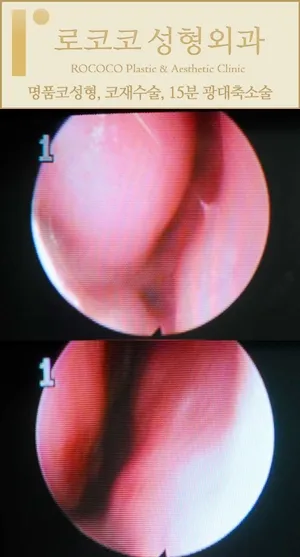
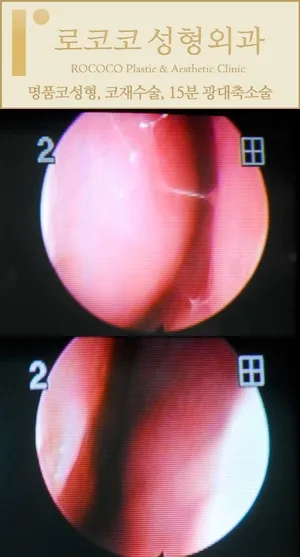
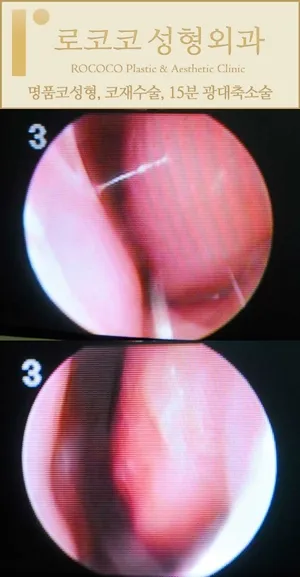
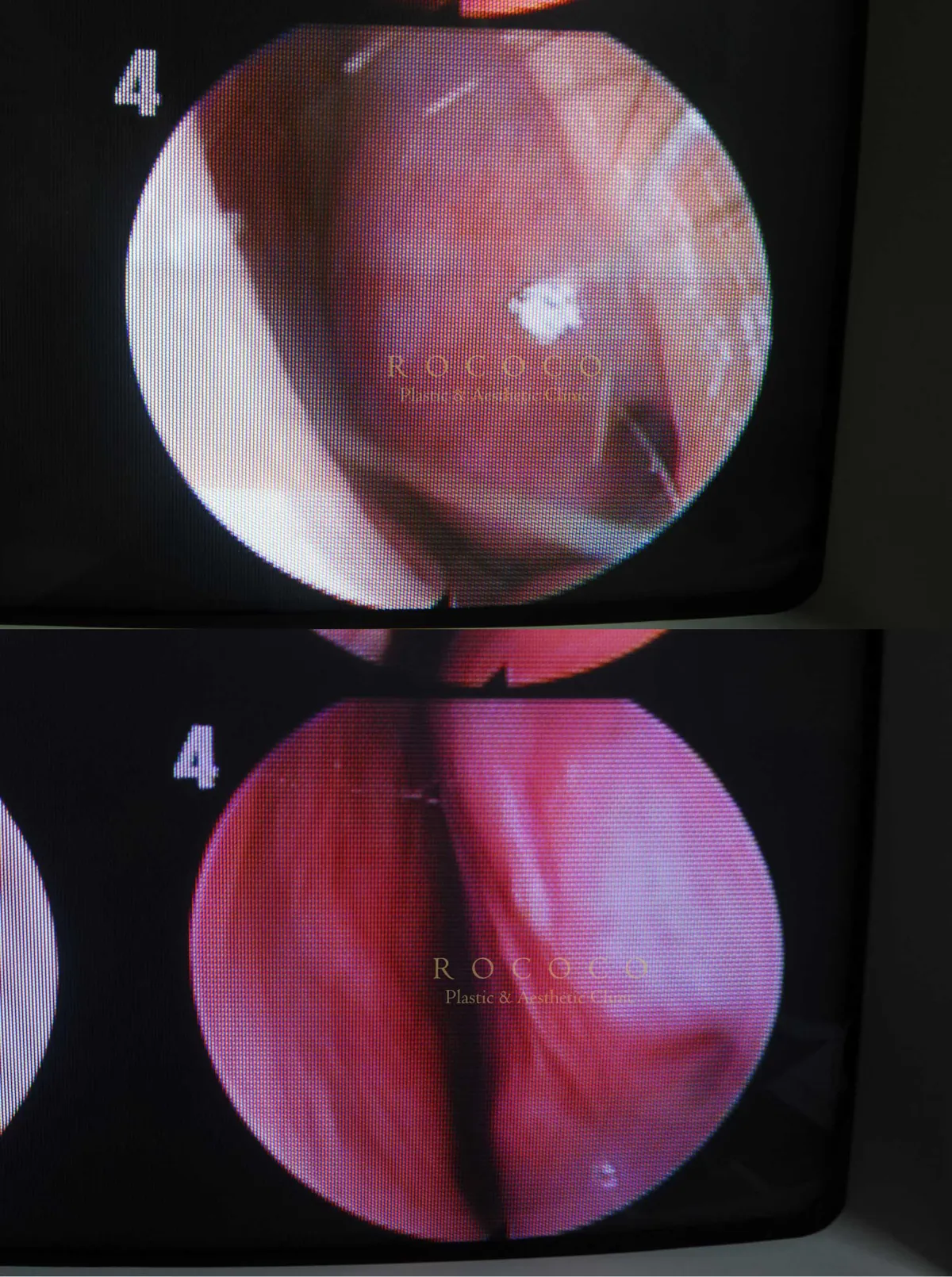
    Before surgery and 6 weeks after. The bulging lump on the outer side of the right nostril has flattened, and you can see the air passage has widened. The mucosa of the inferior turbinate is well preserved.

  4. 2 months

    Endoscopic findings before surgery and 2 months after. Just looking at it, it feels like you can breathe wide open. Of course the patient was really pleased.

  5. 3 months

    Cases where, after rhinoplasty, the mucosa swells more because of surgical swelling, so symptoms similar to allergic rhinitis can appear temporarily, and this is mistaken for allergic rhinitis having developed

    In the second case, after about 3 months the mucosal swelling goes down a lot, and the allergy-like symptoms also disappear.

After partial inferior turbinate reduction, the patient was very happy that breathing had become much easier.

BEFORE & AFTER

Rhinitis surgery: endoscopic before and after

Rhinitis surgery before and after, endoscopic view

Both sides Β· 1 month

Rhinitis surgery before and after, endoscopic view

Right Β· 6 weeks

Rhinitis surgery before and after, endoscopic view

Right Β· 6 weeks

Rhinitis surgery before and after, endoscopic view

Left Β· 6 weeks

Rhinitis surgery before and after, endoscopic view

Both sides Β· 2 months

Rhinitis surgery before and after, endoscopic view

Top: before Β· bottom: after

Results vary from person to person.

FAQ

Frequently asked questions

I don't have rhinitis, but a clinic suggested doing rhinitis surgery along with my rhinoplasty.

In conclusion, I recommend not having surgery at a clinic that suggests rhinitis surgery. However, this is something that could be considered: when the rhinoplasty plan shows that raising the tip will narrow the airway, so breathing discomfort is expected. In such a case, reducing the size of the inferior turbinates preventively, or doing a surgery like this at the same time, could have the meaning of lowering the chance of breathing discomfort.

Can I have rhinitis surgery on its own?

Most rhinitis surgeries are done at the same time as rhinoplasty, only for those who want it, and occasionally rhinitis surgery is done on its own.

Can rhinitis develop after rhinoplasty?

For the statement "I got rhinitis after rhinoplasty.." to be "true", it would have to be that rhinoplasty caused "allergic rhinitis", but allergy is a condition that modern medicine cannot yet cure, and that cannot be created even if you try. So "it is impossible for rhinoplasty to cause allergic rhinitis."

Can the nasal tip sink after deviated septum or rhinitis surgery?

To give just the conclusion.. it is possible, but it very rarely happens in practice. Cases where such a problem is created in clinical practice would be extremely rare, and I think I see such a problem arise during surgery only about once every few years. And even when a saddle nose develops because of such a problem, there are ways to correct it, so you don't need to worry too much.

In winter, my operated nose gets blocked and I get nosebleeds.

Patients come in worried that something may have gone wrong at the surgical site, but as always, in most cases it is simply a symptom of the weather getting dry in winter. When the weather is dry, the inside of the nose also dries out, so there is a lot of crust that often blocks the nose, and the nasal mucosa dries and cracks, so nosebleeds happen easily. It is not a nosebleed that streams out; usually it is just a little blood that comes off.