Homeβ€ΊSeptal Cartilage Rhinoplasty
SEPTAL CARTILAGE Β· SEPTAL GRAFT RHINOPLASTY

Septal Cartilage Rhinoplasty

How is septal cartilage rhinoplasty done?

There are three cartilage materials we mainly use from our own body: ear cartilage, septal cartilage and rib cartilage. Among these three, there is no single best cartilage.

  • 8–10mmWidth of the L-strut that is left in place
  • 1weekRecovery period
  • 2–3weeksTime for stitches inside the nose to dissolve

Dr. Kim Sang-ho Β· Rococo Plastic Surgery

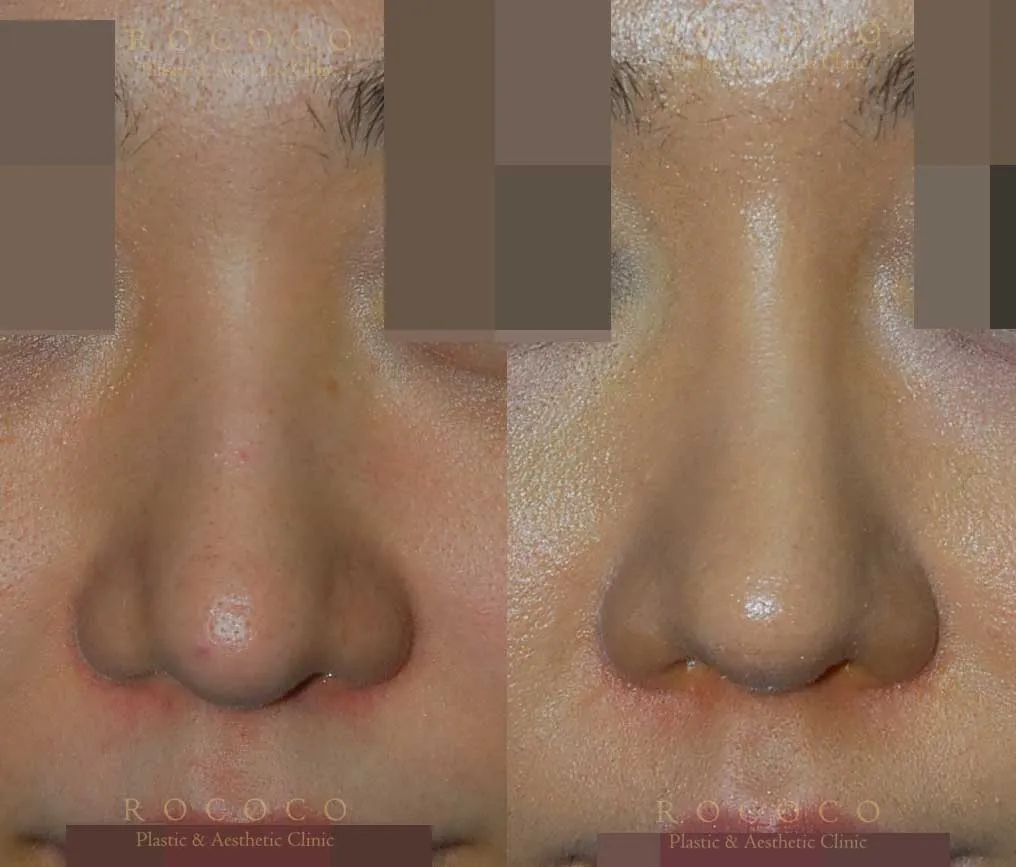
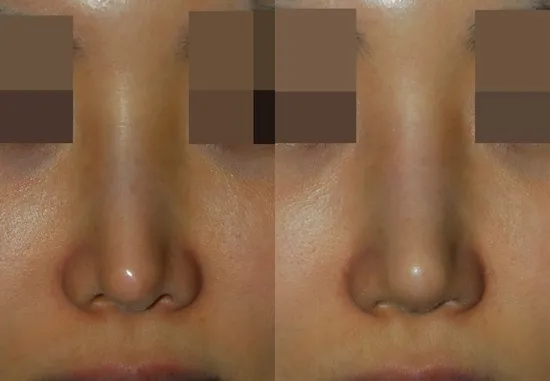
Septal cartilage rhinoplasty and crooked nose correction before and after, front view
CASE

Crooked nose correction with septal cartilage β€” front view

This page is an English translation of Dr. Kim Sang-ho's Korean columns. The original Korean text is shown under each quote.

MATERIAL Β· SEPTAL CARTILAGE

Things about cartilage I often hear at consultations

Each cartilage has its own pros and cons, and the noses of clients having surgery have various characteristics. Not every client wants the same kind of nose, either. Putting all these variables together, the cartilage best suited to that nose is the best cartilage.

DOCTOR'S NOTE

Dr. Kim's notes

Where does septal cartilage come from?

The septal cartilage is covered with mucosa on both sides, and a thin bone is connected to the back of the septal cartilage.

Among the surgeries commonly done in ENT clinics is one called SMR; when the septal cartilage is badly bent and blocks the nose, this surgery cuts out the cartilage in that red area and simply throws it away. In rhinoplasty, that cut-out cartilage is not thrown away but used to raise the nasal tip.

β€” Dr. Kim Sang-ho
Read the original (Korean)

비쀑격 연골은 μ–‘μͺ½μ—μ„œ μ λ§‰μœΌλ‘œ 감싸져 있고, 비쀑격 μ—°κ³¨μ˜ λ’€μͺ½μ—λŠ” 얇은 λΌˆκ°€ μ—°κ²°λ˜μ–΄ μžˆμŠ΅λ‹ˆλ‹€.

μ΄λΉ„μΈν›„κ³Όμ—μ„œ 많이 ν•˜λŠ” 수술 쀑에 SMR μ΄λΌλŠ” 수술이 μžˆλŠ”λ°, 이 μˆ˜μˆ μ€ 비쀑격 연골이 많이 νœ˜μ–΄μ„œ μ½”κ°€ λ§‰νžˆλŠ” κ²½μš°μ— μ € λΉ¨κ°„ λΆ€μœ„ 연골을 μž˜λΌλ‚΄μ„œ κ·Έλƒ₯ λ²„λ¦¬λŠ” μˆ˜μˆ μ΄λžλ‹ˆλ‹€. μ½”μ„±ν˜• μ‹œμ—λŠ” κ·Έ μž˜λΌλ‚Έ 연골을 버리지 μ•Šκ³  코끝을 λ†’μ΄λŠ” 데 μ‚¬μš©ν•˜κ²Œ λ©λ‹ˆλ‹€.

How much is cut out, and how much is left?

The person who asked wrote, " If I have surgery, how much of my septal cartilage do you plan to cut out? " When septal cartilage is harvested for tip rhinoplasty, the idea is not "how much to cut out.." but rather "leave a certain amount and cut out all the rest.."

In the photo above, the blue part of the septum was left and the rest was removed. The reason for leaving the blue area is that it acts as the main beam that maintains the shape of the nose. You can see the red arrow; about 8–10 mm of that width must be left for the nose to stay strong and not collapse. Because the blue area is L-shaped, it is called the L-strut.

β€” Dr. Kim Sang-ho
Read the original (Korean)

μ§ˆλ¬Έν•˜μ‹  뢄이 " μˆ˜μˆ ν•˜κ²Œ 되면 제 비쀑격 연골은 μ–Όλ§ˆλ‚˜ μž˜λΌλ‚΄μ‹€ κ³„νšμ΄μ‹ κ°€μš”? " 라고 μ§ˆλ¬Έν•˜μ…¨λŠ”λ°μš”, 코끝 μ„±ν˜•μ„ μœ„ν•΄ 비쀑격 연골을 μ–»μ„λ•ŒλŠ” μ–Όλ§ˆλ‚˜ μž˜λΌλ‚Έλ‹€.. λŠ” κ°œλ…μ΄ μ•„λ‹ˆλΌ μ–΄λŠ 정도 남기고 κ·Έ μ™Έμ˜ 뢀뢄은 μ „λΆ€ μž˜λΌλ‚Έλ‹€.. 의 λ°©μ‹μœΌλ‘œ μˆ˜μˆ ν•˜κ²Œ λœλ‹΅λ‹ˆλ‹€.

μœ„ μ‚¬μ§„μ—μ„œ νŒŒλž€μƒ‰ 비쀑격을 남기고 λ‚˜λ¨Έμ§€ 뢀뢄을 μ œκ±°ν•˜μ˜€λŠ”λ°μš”, νŒŒλž€μƒ‰ λΆ€μœ„λ₯Ό 남긴 μ΄μœ λŠ” 이 뢀뢄이 μ½”μ˜ λͺ¨μ–‘을 μœ μ§€ν•˜λŠ” λŒ€λ“€λ³΄ 역할을 ν•˜κΈ° λ•Œλ¬Έμž…λ‹ˆλ‹€. λΉ¨κ°„ ν™”μ‚΄ν‘œκ°€ λ³΄μ΄λŠ”λ° κ·Έ 폭을 λŒ€λž΅ 8~10mm μ •λ„λŠ” 남겨야 μ½”κ°€ 내렀앉지 μ•Šκ³  νŠΌνŠΌν•˜κ²Œ μœ μ§€λœλ‹΅λ‹ˆλ‹€. μ € νŒŒλž€ λΆ€μœ„κ°€ L 자 λͺ¨μ–‘μœΌλ‘œ μƒκ²¨μ„œ L-strut 이라고 λΆ€λ₯΄λŠ” λΆ€μœ„μž…λ‹ˆλ‹€.

The tip is the lead; the bridge is the supporting role

The tip cartilages are brought together just to the point where they don't look pinched, separating the tip. This makes the tip look defined from the front. If you get a little greedy at this point and narrow the tip further, it becomes an unattractive pinched tip. In my view, a bulbous nose is better than a severely pinched tip.

Not being greedy with the bridge is what makes a refined nose. After setting the tip position and shape while looking at the whole face, the bridge just needs to flow back from it. The tip should be the lead and the bridge the supporting role. That is the key point of nose design.

β€” Dr. Kim Sang-ho
Read the original (Korean)

μ΅œλŒ€ν•œ μ°ν˜€λ³΄μ΄μ§€ μ•Šμ„ μ •λ„λ‘œ 코끝연골을 λͺ¨μ•„μ„œ μ½”λŒμ„ λΆ„λ¦¬μ‹œμΌœμ€λ‹ˆλ‹€. μ΄κ²ƒμœΌλ‘œ μ •λ©΄μ—μ„œ 코끝이 μ˜€λ˜‘ν•΄λ³΄μ΄κ²Œ λœλ‹΅λ‹ˆλ‹€. 이 μƒνƒœμ—μ„œ 쑰금 더 μš•μ‹¬μ„ λ‚΄μ„œ 코끝을 쀄이면 λ³΄κΈ°μ‹«κ²Œ 찝힌 코끝이 λ©λ‹ˆλ‹€. μ‹¬ν•˜κ²Œ 찝힌 μ½”λλ³΄λ‹€λŠ” 차라리 볡코가 μ’‹λ‹€λŠ” 것이 제 μƒκ°μž…λ‹ˆλ‹€.

μ½§λŒ€λŠ” μš•μ‹¬λ‚΄μ§€ μ•ŠλŠ” 것이 μ„Έλ ¨λœ μ½”λ₯Ό λ§Œλ“­λ‹ˆλ‹€. 얼꡴전체λ₯Ό 보고 코끝 μœ„μΉ˜μ™€ λͺ¨μ–‘을 μž‘μ€ ν›„ μ½§λŒ€λŠ” λ’€λ‘œ 흘렀만 μ£Όλ©΄ λ©λ‹ˆλ‹€. 코끝이 주연이고 μ½§λŒ€λŠ” 쑰연이 λ˜μ–΄μ•Ό ν•©λ‹ˆλ‹€. μ½” λ””μžμΈμ˜ ν•΅μ‹¬ν¬μΈνŠΈμ΄μ§€μš”.

Crooked noses and facial asymmetry

Many people think their face is symmetrical, but no one in the world has a perfectly symmetrical face. In fact, most people have a considerable degree of facial asymmetry.

To briefly share one of the things I have learned about facial asymmetry from looking at Korean faces over the years.. in more than 80% of patients, the right side of the head and face is wider. And the right side of the face sits further back than the left.

Put simply, the central part of the face is rotated to the right relative to the upper central part of the face, like a bottle cap being twisted, and this ratio also seems to be around 70–80%.

Since the base the nose sits on (the facial bones) is itself twisted, it would be impossible for the nose on top of it to look perfectly straight, wouldn't it?

β€” Dr. Kim Sang-ho
Read the original (Korean)

λ§Žμ€ 뢄듀이 본인의 얼꡴은 λŒ€μΉ­μΌ 것이라고 μƒκ°ν•˜μ§€λ§Œ 얼꡴이 μ™„λ²½ν•œ λŒ€μΉ­μΈ μ‚¬λžŒμ€ 세상에 μ‘΄μž¬ν•˜μ§€ μ•ŠλŠ”λ‹΅λ‹ˆλ‹€. 사싀 λŒ€λΆ€λΆ„μ˜ μ‚¬λžŒλ“€μ€ μƒλ‹Ήν•œ μ •λ„μ˜ μ•ˆλ©΄λΉ„λŒ€μΉ­μ„ κ°€μ§€κ³  μžˆμŠ΅λ‹ˆλ‹€.

κ·Έλ™μ•ˆ ν•œκ΅­μΈμ˜ 얼꡴을 λ³΄λ©΄μ„œ μ œκ°€ μ•Œκ²Œ 된 것듀 μ€‘μ—μ„œ μ•ˆλ©΄ λΉ„λŒ€μΉ­μ— λŒ€ν•΄ κ°„λ‹¨νžˆ 말씀을 λ“œλ¦¬μžλ©΄.. 80% μ΄μƒμ˜ ν™˜μžμ—μ„œ 우츑 두상과 얼꡴이 더 λ„“μŠ΅λ‹ˆλ‹€. 그리고 쒌츑 얼꡴에 λΉ„ν•΄μ„œ 우츑 얼꡴이 뒀에 μžˆμŠ΅λ‹ˆλ‹€.

μ‰½κ²Œ λ§ν•΄μ„œ μ–Όκ΅΄μ˜ 쀑심뢀가 μ–Όκ΅΄ μœ„μͺ½ 쀑심뢀에 λΉ„ν•΄μ„œ 였λ₯Έμͺ½μœΌλ‘œ λ³‘λšœκ»‘ λŒμ•„κ°€λ“―μ΄ λŒμ•„κ°€μžˆλ‹€λŠ” λ§μΈλ°μš”, 이 λΉ„μœ¨ μ—­μ‹œ λŒ€λž΅ 70~80%정도 λ˜λŠ” 것 κ°™μŠ΅λ‹ˆλ‹€.

μ΄λ ‡κ²Œ μ½”κ°€ 놓인 λ°”λ‹₯(μ–Όκ΅΄λΌˆ) μžμ²΄κ°€ ν‹€μ–΄μ Έ μžˆμœΌλ‹ˆ κ·Έ μœ„μ— 놓여 μžˆλŠ” μ½”κ°€ 1자둜 λ³΄μ΄λŠ” 것이 λΆˆκ°€λŠ₯ν•˜κ² μ§€μš”?

METHOD

Surgical method

  1. STEP 01

    There are crooked noses where only the tip is bent and crooked noses where the bridge, including the nasal bones, is bent; the patient in the photo has a tip and bridge that are quite significantly bent overall.

  2. STEP 02

    In crooked nose correction, generally the most important thing is.. aligning the tip as closely as possible with the center line of the glabella.

  3. STEP 03

    It isn't always the case, but.. after that, the nasal bones should be cut asymmetrically (osteotomy) so that the left side is pushed in further than the right, right?

  4. STEP 04

    Then the upper lateral cartilage area between the nasal bones and the tip is corrected. The right side is sunken, so a spreader graft can be placed to add volume; the bulging left side could be pushed toward the center line, but that would make breathing through the left nostril difficult, so that is the limit of this crooked nose correction.

  5. STEP 05

    A slight bulbous tip correction was also done by repositioning the tip cartilages.

In photos from a different angle, volume was added to the right upper lateral cartilage as much as possible, but not being able to reduce the volume of the left upper lateral cartilage further inevitably leaves a little regret. It can't be helped, because breathing function cannot be given up.

Although the crooked nose was corrected, the nose still looks turned to the right because of severe facial asymmetry, so further correction is difficult.

When correcting a crooked nose that comes with facial asymmetry, the surgical plan inevitably gives more priority to shape, so nasal breathing sometimes becomes harder after surgery. In such cases, I explain the possibility of breathing discomfort in advance at the consultation before surgery, and the patient makes the final decision.

RECOVERY

Recovery

  1. Day of surgery

    Under sedation, the nasal tip was raised using septal cartilage and the bridge was raised with silicone. At the same time, the crooked nose was corrected.

  2. Day 5 Β· day 10

    Because of the client's circumstances it was hard to come in for treatment, so after one treatment following surgery, the tape was removed at the second treatment on day 5, and today, day 10, the client came in for a check-up.

    There is still a little residual swelling on the tip and between the eyebrows.

  3. 1 week

    Recovery period: 1 week. Face washing and makeup: from 1 week.

  4. 2–3 weeks

    The stitches inside the nose don't need to be painfully removed; they dissolve and disappear within 2–3 weeks.

    As the residual swelling goes down, the nose will become softer, more natural and smoother.

  5. 2 months

    It is 2 months after surgery, so the swelling of the tip is still noticeable.

For revision after filler, swelling lasts a little longer than with ordinary nose surgery.

BEFORE & AFTER

Septal cartilage rhinoplasty: before and after

Septal cartilage rhinoplasty before and after

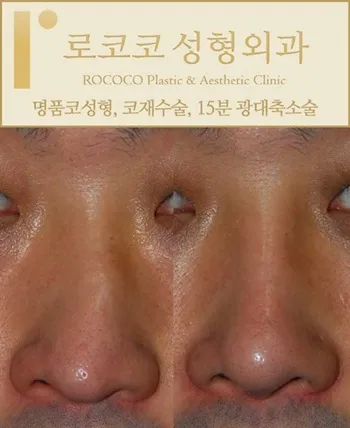
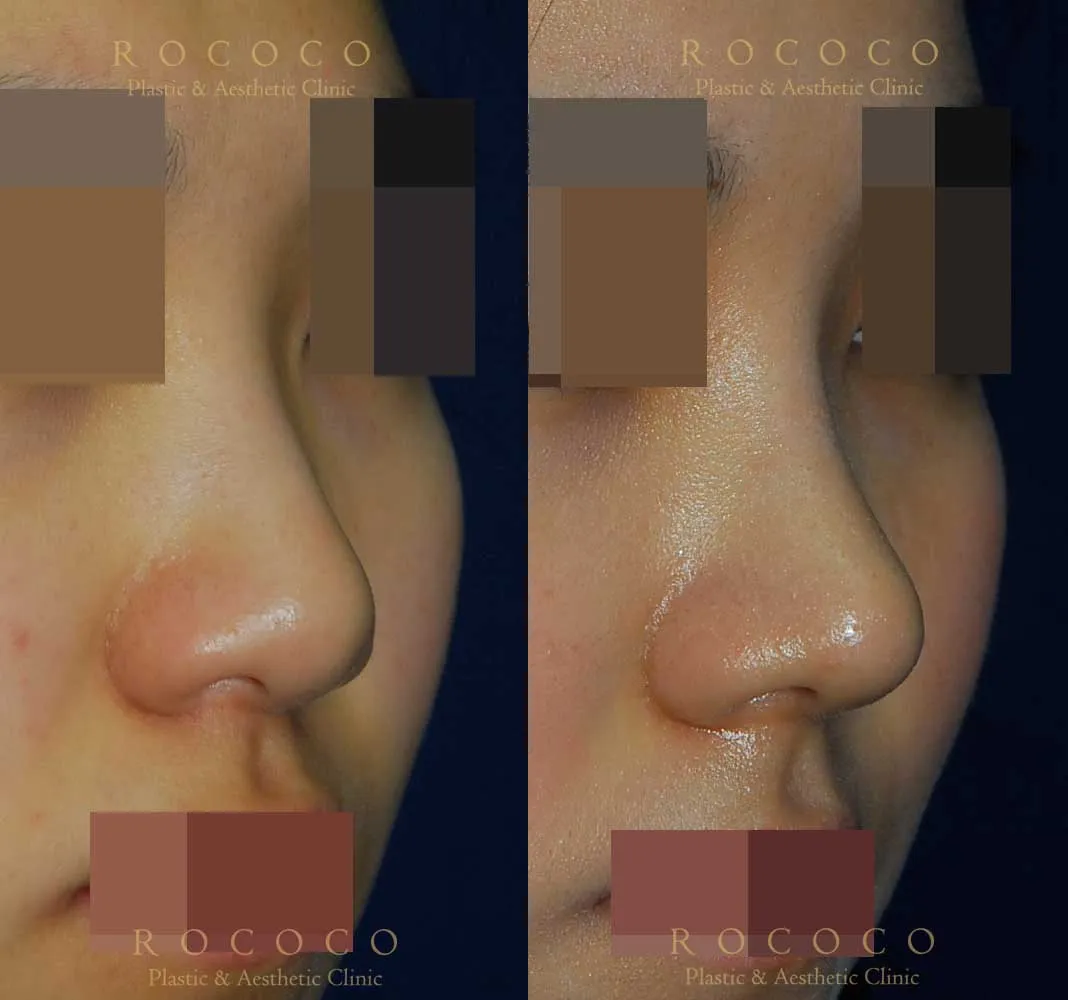
Crooked nose, front, 2 months

Septal cartilage rhinoplasty before and after

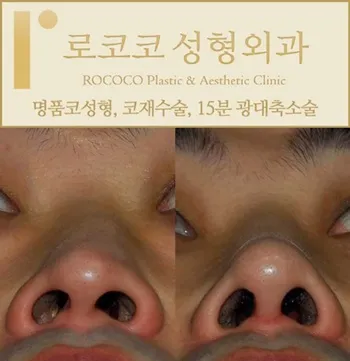
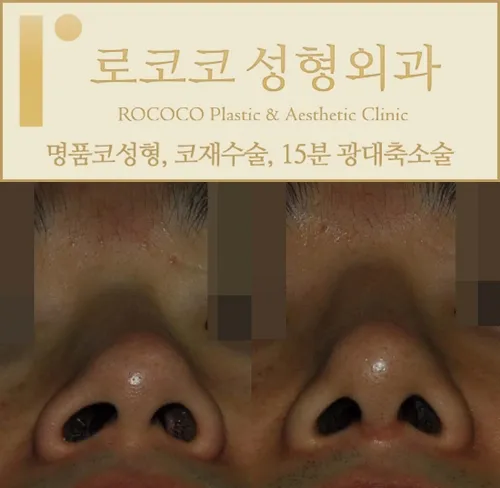
Crooked nose, from below

Septal cartilage rhinoplasty before and after

Crooked nose, front, 2 weeks

Septal cartilage rhinoplasty before and after

Crooked nose, from below

Septal cartilage rhinoplasty before and after

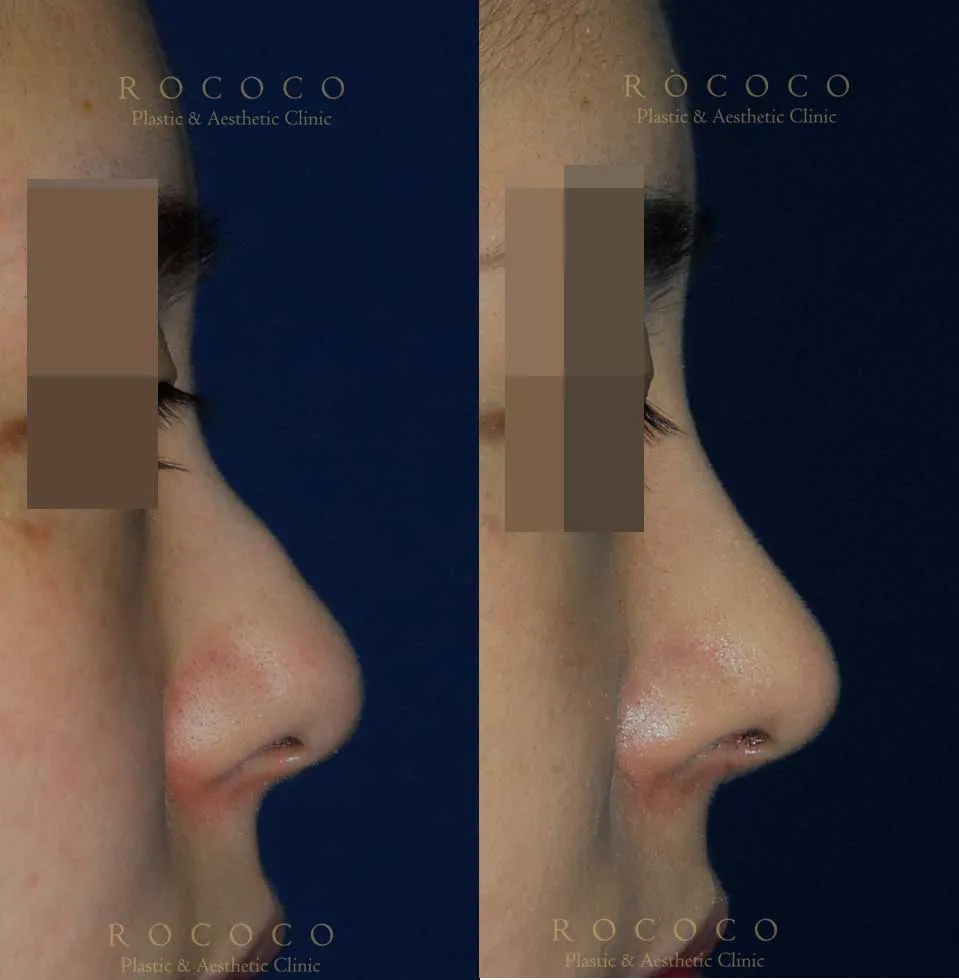
Side

Septal cartilage rhinoplasty before and after

Nasal tip, side

Septal cartilage rhinoplasty before and after

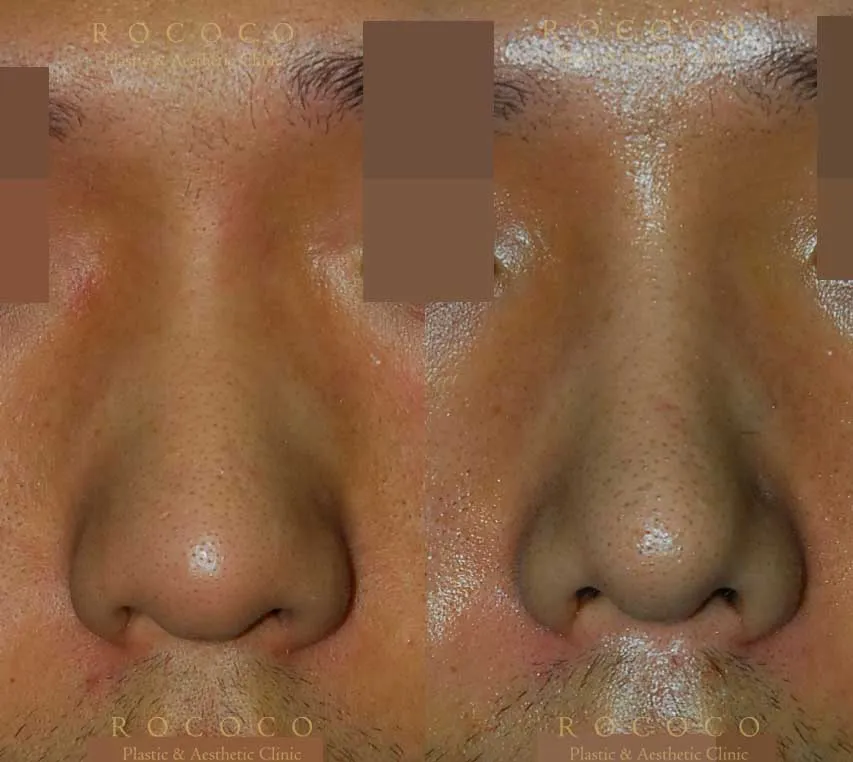
Bulbous nose, front

Septal cartilage rhinoplasty before and after

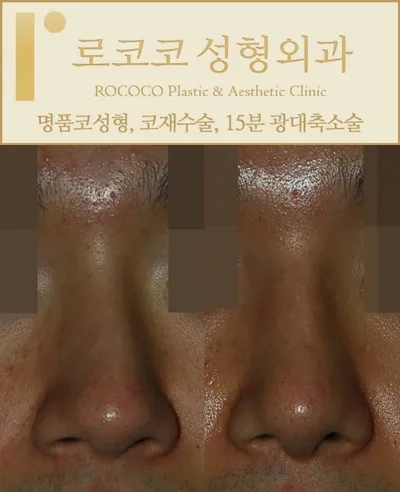
Revision, front, 2 months

Results vary from person to person.

FAQ

Frequently asked questions

Won't the nose collapse if septal cartilage is removed?

If too much is cut out, as in the drawing above, without leaving a sufficient L-strut of about 8–10 mm.. this part weakens and the main beam can collapse like this. Then the area below the nasal bones can sink in like this. Because such a nose looks like a horse saddle, it is called a saddle nose. However, if you have surgery with a properly trained, qualified plastic surgery specialist, you can assume there is almost no chance of this happening. The nose collapsing like that after rhinoplasty is truly extremely rare.

Why use septal cartilage rather than ear cartilage?

For this person, given the characteristics of the nose, septal cartilage was judged to be the best material, so septal cartilage was used. It would be difficult to create this postoperative nose shape with ear cartilage (not impossible), and for surgery of this extent, the desired nose can be made without using rib cartilage.

If I have a deviated septum, does it have to be straightened to correct a crooked nose?

No one has a perfectly straight space where the septum sits. It is bound to be twisted, even slightly. So there is no case where the septum itself is perfectly straight. That is because a perfectly symmetrical face doesn't exist.. In other words, strictly speaking, everyone in the world has a deviated septum. Many people vaguely think.. "I have a deviated septum, so it has to be straightened for my nose to be straight.." but this really applies only in some cases. Over many years of practice I must have performed countless crooked nose surgeries.. From that experience, what I consider the biggest cause of a crooked nose is <facial asymmetry>. The base the nose sits on, that is, the central axis of the face, is twisted, so the nose in the middle of the face cannot help but be crooked.

Does raising the bridge make a crooked nose more noticeable?

The patient wanted the bridge a bit higher, so I raised it with a 3 mm silicone implant; usually raising the bridge makes the crooked look a little more noticeable. The patient judged that the satisfaction of a higher bridge outweighed a slightly more crooked look, so I did the surgery the way they wanted.

I had surgery with septal cartilage before. Do I have to use rib cartilage for revision?

When I feel the nasal tip, I can feel a firm septal strut. In this case, this septal strut can be reused for pointed nose correction. The patient said that at another clinic they were told autologous rib cartilage would be needed for revision, but in this condition, additional rib cartilage is not needed at all.